Every breakfast menu offers eggs any style, and every diner has watched a plate land with eggs cooked one shade off from what they pictured. The vocabulary is small, old, and precise once you learn it. The differences come down to three questions: is the egg flipped, is the yolk runny, and is the white fully set.
The flipped eggs
Over easy means the egg is fried on one side, flipped briefly, and served with the white just set and the yolk fully runny. Over medium flips it a little longer: the yolk thickens to a jam-like center that coats rather than spills. Over hard cooks the yolk through completely, firm and pale. The three are a single scale, and ordering the middle one precisely is the mark of a person who knows their own breakfast.
The unflipped and the stirred
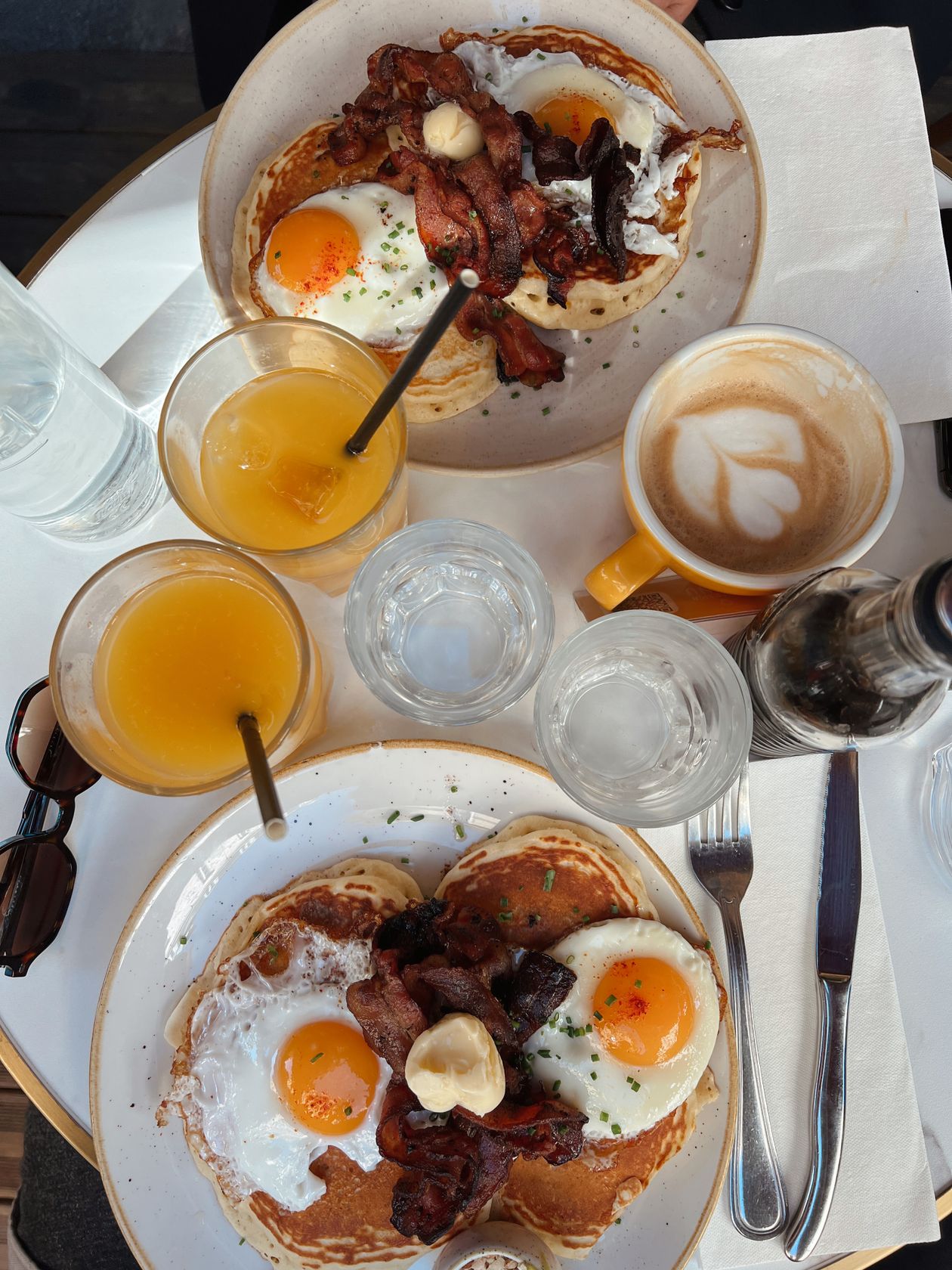
Sunny side up is never flipped: white set from below, yolk bright and runny on top, the prettiest egg and the easiest to break in transit. Scrambled eggs are stirred in the pan; order them soft if you like them glossy and just set, or well done if you want them firm, because kitchens default to the middle. Poached eggs are cooked in water rather than fat, gentler and cleaner-tasting, and fried eggs in the diner sense usually means cooked in the griddle's fat until the edges crisp.
How to order without a translation error
Say the style, then the detail that matters to you: over medium, yolk just set. Scrambled soft. Fried, edges crisp, yolk broken, if that is your sandwich egg. Servers at a place like Breakfast Nook hear these orders all morning and write them in the kitchen's own shorthand, so plain words beat descriptions. And if the plate lands wrong, say so at once: an egg refires in a minute, and no cook wants you eating the wrong breakfast quietly.
Omelettes and scrambles: the folded cases
The omelette is where egg vocabulary gets local. A diner omelette is typically three eggs wrapped around a filling: cheese, ham and cheese, or a heavier build like a Philly cheesesteak omelette with steak, peppers, onions, and cheese. The egg in an omelette is cooked through and folded, so doneness words matter less than filling words. What matters instead is proportion: a good omelette is a filling delivery system with the egg as the wrapper, and a diner that makes hundreds a week keeps that ratio honest.
Scrambles sit between worlds: eggs stirred with ingredients rather than folded around them. An egg plate's scrambled eggs are plain by default; a scramble with cheese or vegetables is an order you specify. Either way, eggs reward the diner who speaks plainly and early. The griddle does not read minds, but it hears a clear order perfectly, and a breakfast cooked exactly the way you pictured it is a small, complete satisfaction that sets a tone for the whole day.
A short vocabulary worth memorizing
Six phrases cover nearly every breakfast you will ever order: over easy, over medium, over hard, sunny side up, scrambled soft, scrambled well. Learn the one or two that describe your egg and the rest become other people's orders. If you are feeding a table, collect styles before the server arrives, because eggs are ordered person by person and a table that answers in chorus eats sooner. And if a child at the table wants the yolk not runny, not jiggly, and not visible, the translation is scrambled well or over hard, and ordering it that way the first time saves a plate, a wait, and a morning.
Common questions
What is the difference between over easy and over medium?
Time after the flip. Over easy keeps the yolk fully runny; over medium thickens it to a jammy center. Both have fully set whites when done right.
How do I get scrambled eggs soft, not rubbery?
Order them soft or lightly scrambled, and eat them when they land. Scrambled eggs keep cooking in their own heat, so a soft egg eaten promptly is the goal.
Which style is best on a biscuit sandwich?
Fried or over hard, with the yolk cooked through or broken. A runny yolk in a handheld biscuit ends up on your shirt by the second bite.
Photos in this guide are representative stock images.
← All guides from Breakfast Nook← Back to Breakfast Nook